

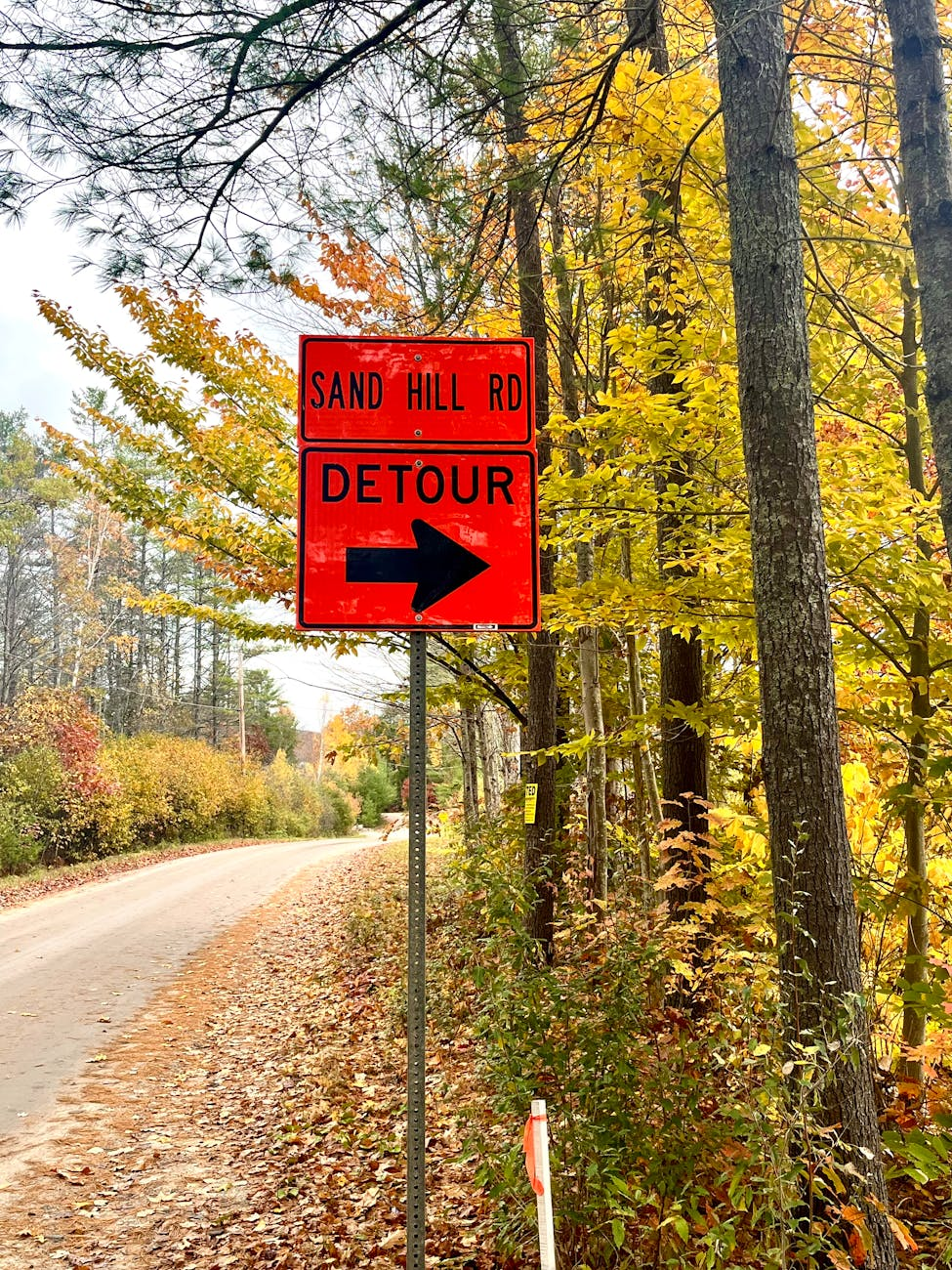
Finding Peace in Life’s Detours
When Chaos Interrupts Your Peace
The wrapping paper has been stored away already. Christmas is behind us. But Matthew will not let us linger at the manger.
He reminds us that the first Christmas was immediately followed by a crisis. The “silent night” gave way to a warning in the darkness. An angel appears with an urgent command: “Get up. Take the child. Run.”
Life often speaks this way. Just when we think we have arrived—plans settled, routines established—circumstances interrupt and say, “It’s time to move.”
Today, we explore what happens when chaos crashes into our peace, learning from those who have walked this road before us.
Scripture:
“Now when they had departed, behold, an angel of the Lord appeared to Joseph in a dream and said, ‘Rise, take the child and his mother, and flee to Egypt, and remain there until I tell you, for Herod is about to search for the child, to destroy him.’ And he rose and took the child and his mother by night and departed to Egypt and remained there until the death of Herod. This was to fulfill what the Lord had spoken by the prophet, ‘Out of Egypt I called my son.’” — Matthew 2:13-15 (ESV)
The Context
King Herod—paranoid, violent, consumed by power—feels threatened by a toddler. The wise men have just left. Their gifts are still fresh. But joy turns to danger in an instant.
God intervenes with an urgent command: “Flee to Egypt.”
Notice what God does NOT give Joseph:
- No explanation of why Egypt
- No timeline for how long
- No details about the provision
- No roadmap
Only direction. Only presence. Only promise.
Joseph’s obedience is immediate. Verse 14: “And he rose and took the child and his mother by night and departed to Egypt.”
That very night. No delay. No debate.
This is Jesus’ family—not free from crisis, but led through it.
Story: Rita’s Midnight Move
The Senior’s Experience
Rita, 78, had lived in her home for 52 years. Every corner held a memory—where her children learned to walk, where her husband’s favorite chair sat by the window, where three generations of family gathered for holidays. The house was not just shelter—it was her story, her identity, her place in the world.
One Tuesday evening, she fell in the hallway and was unable to get up. Six hours later, a concerned neighbor found her on the floor.
During her hospital stay, her daughter told her, “Mom, it’s time to consider assisted living. You can’t live alone anymore.”
Rita found herself feeling overwhelmed when she was moved to a care facility in under two weeks. The abruptness was harsh, reminiscent of Joseph’s escape in the middle of the night.
“I had no time to prepare properly,” she told her chaplain months later. “No chance to say goodbye to each room, to make peace with leaving. One day, I was home. The next day, I was not. Everything happened in the dark—literally and figuratively. I didn’t understand why it had to be so fast, so sudden.”
The first three months were the hardest. She felt displaced, confused, and angry. “Why couldn’t I have had more time?” she asked God repeatedly. “Why this urgency?”
However, six months after the move, a second incident provided her with clarity. Another resident—a woman Rita’s age who still lived independently in a nearby apartment—fell in her home and was not found for two days. She did not survive.
Rita sat in the chapel that afternoon, tears streaming down her face. “That could have been me,” she whispered. “If I’d stayed, if I’d had ‘more time,’ that would have been me.”
She came to realize that what initially appeared to be harsh haste was, in fact, an act of compassion. The purpose of speeding up the process was not to remove her from her home, but to prioritize her safety and well-being.
“Looking back now,” Rita said, “I see it clearly. My ‘Egypt’ was not punishment. My family’s urgency was not them taking control. It was God saying through them: ‘Rise. Take what you need. Move. Now. I am protecting you.’”
Rita’s wisdom: “Sometimes God interrupts our plans with urgency because He sees the danger we don’t. The speed that feels cruel is actually His mercy.”
Just as God moved Joseph quickly to protect Jesus, He sometimes moves us urgently to protect us.
What the In-Between Generation Learns
Reflection for Those in Their 40s-60s
Rita’s daughter, Susan (age 54), wrestled with guilt for months after the move. “I felt like I was ripping Mom from everything she loved. She kept saying she needed more time, and I felt heartless pushing forward.”
But Rita’s words changed Susan’s perspective: “You weren’t being cruel. You were being obedient to what you saw that I couldn’t see.”
What this teaches the in-between generation:
Sometimes love requires us to act with urgency even when our loved ones resist. Rita’s story reminds us that:
- Sometimes you have to make hard decisions quickly—and that’s not cruelty, it is care. When aging parents face danger, waiting for them to “be ready” might mean waiting until it is too late.
- The resistance you face does not mean you’re wrong. Joseph did not consult with extended family about fleeing to Egypt. He did not wait for Mary to feel ready. He obeyed—and that obedience saved Jesus.
- Trust the urgency you feel when safety is at stake. If something in your spirit says, “This needs to happen now,” listen. You may be hearing what they cannot hear yet.
- Your loved one may thank you later for the decision they resent now. Rita’s gratitude came months after the move—but it came.
Susan’s insight: “I learned that honoring my mother sometimes meant making decisions she didn’t like at the time, but that would protect her in the long run. That is what Joseph did. That’s what we’re sometimes called to do.”
What the Younger Generation Learns
Reflection for Young Adults
Bryan, Rita’s grandson (age 24), observed his grandmother’s transition from the perspective of a young adult. He saw her distress, heard her protests, and witnessed her eventual peace.
“I thought my mom was being harsh,” he admitted. “Grandma kept saying she just needed more time to prepare, and I thought, why not give it to her? What is the rush?”
But Rita’s story taught him something crucial about life that his generation often misses.
What this teaches young adults:
- Not all preparation time is helpful—sometimes it is just a delay. Rita’s “need for more time” was not about practical preparation (she’d never be ready emotionally). Sometimes what feels like needing more time is actually fear disguised as prudence.
- Urgent obedience is not reckless—sometimes it’s wisdom. His generation values careful planning, researching all options, and taking time to decide. But Rita’s story shows that some decisions require swift action, even imperfect action.
- The people who love you might see danger you do not see yet. Joseph did not wait for signs of Herod’s soldiers. He responded to the warning. Sometimes wisdom means trusting those with more life experience.
- Your resistance to change does not mean the change is wrong. Bryan realized: “Grandma’s feelings were valid, but they weren’t the whole truth. She felt displaced—but she was actually being protected.”
Bryan’s insight: “I learned that maturity isn’t always about having time to figure things out. Sometimes it is about trusting God’s urgency through the people He places around you. Grandma taught me that by living it.”
Studies & Wisdom:
Theological Insight: Urgent Obedience in Scripture
Joseph’s immediate response (“he rose… by night”) is a pattern throughout Scripture:
- Abraham left Ur with only God’s promise.
- Moses led Israel out when God said “go”—no extended timeline.
- The disciples dropped their nets immediately when Jesus called.
Biblical scholar R.T. France writes: “Urgent obedience is the hallmark of faith. Those who say, ‘let me first…’ often miss the moment of God’s movement.”
Rita’s midnight move mirrors Joseph’s midnight flight—both were acts of faith in the face of incomplete information.
Wisdom from Charles Spurgeon
“God’s timing is always right. What feels too fast to us is exactly on schedule for Him. He sees the threats we don’t see and moves us with urgency, not to frighten us, but to save us.”
Statistics on Senior Safety
According to the CDC and National Council on Aging:
- One in four adults 65+ falls each year.
- Every 11 seconds, a senior is treated in the ER for a fall.
- Every 19 minutes, a senior dies from a fall.
- Key finding: Seniors who delay transition to safer environments after a first fall are 300% more likely to experience a catastrophic second fall within 6 months.
Rita’s close call highlights real risk. Her family’s sense of urgency was a correct assessment, not an overreaction.
Application: Living Through Sudden Change
Questions for Reflection
- What sudden change are you facing right now?
- What if the urgency you are feeling (or resisting) is actually God’s protection?
- Who in your life might be seeing danger you cannot see yet?
Three Truths to Hold
- God speaks into chaos with clarity (Joseph got direction, not explanation)
- Urgent obedience is not reckless—it is faith (Waiting for “perfect readiness” can mean missing God’s timing)
- Your chaos does not cancel God’s control (Herod tried to kill Jesus; God saved Him)
Prayer for This Week
Lord,
When chaos interrupts my peace, help me hear Your voice above the noise.
When urgency feels like cruelty, help me trust it might be Your mercy.
When I don’t understand the “why,” give me the courage to obey the “Who.”
You were not surprised by this disruption. You are already working Your purposes through it.
Help me take the next faithful step, even when I cannot see the full journey. Like Rita. Like Joseph, by faith. In Jesus’ name, Amen.
Music for Meditation
Way Maker – Even when I don’t see it, You’re working / Even when I don’t feel it, You’re working.
Discussion Question to Ponder: Has there been a time when an urgent change you resented later revealed itself as protection?
Share Your Story: How has God’s “urgency” in your life—even when you did not understand it—later proved to be His mercy? Your story might encourage someone facing their own midnight move.