

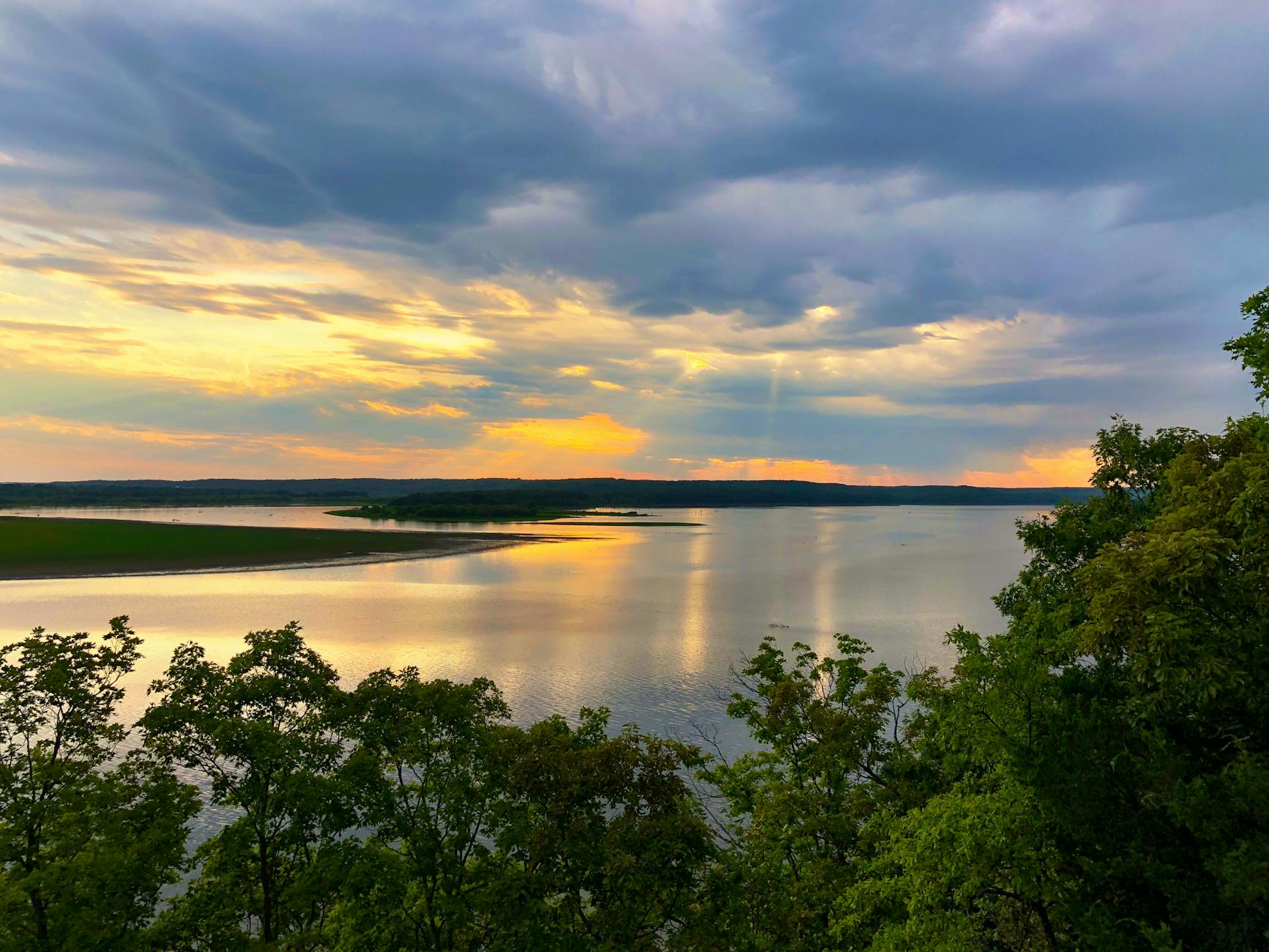
Finding God’s Wonder in the World He Created
Do you remember the last time you stopped to really look at the sky? Or listened to birds singing in the morning? God’s creation is still speaking, still showing us His glory. And maybe now, with more time to notice, we can hear it better than ever.
God reveals Himself through the world He made. Nature is not just beautiful—it is a window into God’s heart.
Scripture:
“The heavens declare the glory of God; the skies proclaim the work of his hands.” – Psalm 19:1 (NIV)
Additional Verses:
- “For since the creation of the world God’s invisible qualities—his eternal power and divine nature—have been clearly seen, being understood from what has been made.” – Romans 1:20 (NIV)
- “But ask the animals, and they will teach you, or the birds in the sky, and they will tell you; or speak to the earth, and it will instruct you, or let the fish in the sea inform you.” – Job 12:7-8 (NIV)
- “The earth is the LORD’s, and everything in it, the world, and all who live in it.” – Psalm 24:1 (NIV)
Scripture Reflection
On Psalm 19:1 – The heavens “declare” God’s glory. They declare—loudly, clearly, constantly. Every sunrise announces God’s faithfulness. Every starry night displays His majesty. Every cloud formation reveals His creativity. Creation is not silent. It is constantly shouting about God’s glory. We just need to stop and listen.
On Romans 1:20 – Paul tells us that God’s “invisible qualities” can be seen through creation. His eternal power—look at the ocean’s waves, the mountain’s height, the storm’s strength. His divine nature—see it in a flower’s delicate beauty, a butterfly’s design, a baby bird being fed. Creation is God’s first book, readable by everyone, teaching us about who He is.
On Job 12:7-8 – Job invites us to learn from nature. Ask the animals. Watch the birds. Look at the earth. They all have lessons to teach us about God. A tree that survives storms teaches us about resilience. A seed that becomes a flower teaches us about transformation. Creation is God’s classroom, and we are students learning about our Creator.
On Psalm 24:1 – Everything belongs to God. The earth. Everything in it. The world. All who live in it. When we see a beautiful sunset, we are seeing God’s property. When we hear birds sing, we are hearing His creatures. When we walk on grass, we are walking on His earth. This truth should fill us with wonder—we live in God’s world, surrounded by His creations, held by His hands.
Stories
Arthur’s Morning Ritual: Coffee with the Creator
Arthur, 78, starts every morning the same way. He pours his coffee, wraps a blanket around his shoulders, and sits on his small patio. “I used to rush through mornings,” he told me. “Always busy, always hurrying. But now? Now I have time to notice.”
What does he notice? “Everything,” Arthur smiled. “The sky changing colors as the sun comes up. The birds waking up—cardinals, sparrows, sometimes a blue jay. The way the light hits the trees. The clouds moving.”
Arthur opened his worn Bible to Psalm 19:1. “The heavens declare the glory of God. I read this verse for years, but I never really saw it until I slowed down enough to look at the heavens. Now I see it every morning—God’s glory, right there in the sunrise.”
He pointed to his bird feeder. “See those sparrows? Jesus said God feeds them. Not one falls to the ground without Him knowing. If He cares for them, He cares for me. Watching them reminds me I am not forgotten.”
Arthur’s daughter worries he is lonely living alone. But Arthur does not feel alone. “How can I be lonely?” he asked. “I start every day with the Creator. I see His work all around me. I hear His creatures singing. I feel His sun warming my face. That is not loneliness. That is communion.”
Research from the University of Michigan shows that spending time in nature significantly reduces stress and improves mental health in older adults. But Arthur would say it simpler: “Nature is where I meet God. Every morning, He shows me something new about Himself. And I am filled with wonder.”
Betty’s Garden Cathedral
Betty, 81, has a small flower garden behind her house. “I cannot do much anymore,” she admitted, showing me her raised beds. “My daughter built these higher so I do not have to bend so far. But I can still plant. I can still water. I can still watch things grow.”
Betty planted marigolds, zinnias, and sunflowers this year. “People think gardening is about the flowers,” she said. “But for me, it is about seeing God work. I plant a tiny seed—barely bigger than a grain of sand. And God turns it into this.” She pointed to a sunflower taller than her head.
“That is resurrection,” Betty said quietly. “That is what God does. He takes small things, dead-looking things, and makes them beautiful and alive. Every flower is a sermon. Every bloom is a reminder that God brings life from death.”
Betty’s garden has become a gathering place. Neighbors stop to admire the flowers. Children ask questions. Birds and butterflies visit. “My garden is my cathedral,” Betty explained. “This is where I worship. This is where I see God’s creativity, His timing, His care for details. Every petal is painted by Him.”
When Betty’s husband died three years ago, she nearly gave up gardening. “I thought, ‘What is the point?’ But the spring came anyway. And something in me needed to plant seeds. Needed to see life continue. Needed to remember that God is still creating, still bringing beauty out of darkness.”
Now Betty says her garden saved her. “Not the flowers—God. But He used the flowers to remind me: He is still here. Still at work. Still making beautiful things. If He can turn a seed into a sunflower, He can turn my grief into something beautiful too.”
Studies in horticultural therapy show that gardening improves physical and mental health in seniors, providing purpose and reducing depression. But Betty knows the deeper truth: “Gardening connects me to the Creator. When my hands are in the soil, I feel close to the One who made it all.”
Walter’s Window on the World
Walter, 85, is largely homebound now. A stroke two years ago left him with limited mobility. He spends most of his time in his recliner by the window. “People pity me,” Walter said. “They think I am stuck. But I am not stuck. I have a front-row seat to God’s show.”
His window faces east, overlooking a small park. “I see everything from here,” Walter told me with excitement. “Sunrise every morning—never the same twice. Trees changing through the seasons—right now the leaves are turning gold. Squirrels chasing each other. Dogs being walked. Children playing.”
Walter keeps a notebook on his lap. “I write down what I see. Not just what, but what it teaches me about God.” He showed me some entries:
“Watched a robin building a nest. God gives creatures instinct to build homes. He gives me instinct to build my life on Him.”
“Storm today. Trees bent but did not break. God lets storms come, but He made me flexible enough to survive them.”
“Saw an old man helping his wife walk. Moving slow but moving together. That is how God walks with me—patient, steady, never leaving me behind.”
Walter’s pastor visits regularly. “I used to think I needed to go out to find God,” Walter reflected. “Go to church, go to Bible study, go on mission trips. And those were good. But now I cannot go anywhere. And I have discovered something: God comes to me. He paints sunrises in my window. He sends birds to my view. He shows me His creativity in clouds and His faithfulness in seasons.”
Walter smiled. “I am closer to God now than I was when I could go everywhere. Because now I have time to look. Time to notice. Time to wonder. My body is stuck, but my soul is free to roam through God’s creation. And it is glorious.”
Research shows that even viewing nature through a window improves recovery time and reduces stress in elderly patients. Walter embodies this truth: “You do not have to be in nature to experience it. You just have to pay attention. God brings His creation to us, even when we cannot go to it.”
Reflection
In our busy younger years, we often rushed past God’s creation. We had places to go, things to do, and schedules to keep. A sunrise was just the start of another day. A tree was just something in the yard. Birds were background noise.
But now, with more time to notice, we can see what we missed before. And what we find is breathtaking: God has been speaking through His creation all along.
Psalm 19:1 tells us “the heavens declare the glory of God.” The Hebrew word for “declare” is active, continuous. The heavens are constantly declaring, endlessly proclaiming. Day after day. Night after night. God’s creation never stops telling us about Him.
What does it tell us? Everything.
His power—in thunder, in waves crashing, in storms that remind us we are not in control.
His creativity—in every flower’s unique design, in the endless variety of birds, in snowflakes that are never identical.
His attention to detail—in the intricate pattern of a butterfly’s wing, in the way a spider spins its web, in the perfect mathematics of a honeycomb.
His faithfulness—in seasons that return, in the sun that rises, in seeds that become plants just as He designed.
His generosity—in fruit that feeds us, in rain that waters the earth, in beauty given freely, not because we earned it.
His care—in birds He feeds, in flowers He clothes, in creation He sustains moment by moment.
Romans 1:20 tells us that God’s “invisible qualities” are “clearly seen” through creation. Think about that. God’s invisible qualities are visible. How? Through what He has made. Nature is like a window into God’s character. We cannot see God directly, but we can see His fingerprints everywhere.
This is why spending time in nature is not just pleasant—it is spiritual. When Arthur watches the sunrise, he is not just looking at pretty colors. He is seeing God’s glory declared. When Betty plants her garden, she is not just growing flowers. She is partnering with the Creator in His work of bringing life. When Walter watches from his window, he is not just passing time. He is having daily appointments with God, who reveals Himself through creation.
The Puritan preacher Matthew Henry wrote: “The heavens and earth are full of instructions for us.” He understood that nature is God’s first book, teaching us about Him before we ever open the Bible.
And here is something beautiful: you do not have to be able to travel far to experience this. Arthur has his patio. Betty has her small garden. Walter has his window. God brings His creation to where we are. A bird at the feeder. A cloud passing by. A flower in a pot. The moon rising. These are not just nature—they are messages from God saying, “I am here. I am creative. I am faithful. I am caring for you.”
In later life, when our world may have gotten smaller, when we cannot travel like we used to, when we spend more time in one place—we have a gift. We have time to notice. Time to look closely. Time to see what we rushed past before.
We have time to be filled with wonder.
Wonder is not just for children. In fact, it may be that older adults are better at wonder than anyone else. We have seen enough of life to know that we cannot explain everything. We have experienced enough to be amazed by mysteries. We have lived long enough to recognize miracles when we see them.
Every sunrise is a miracle—the earth spinning just right, the sun appearing right on schedule, colors painting the sky that no human artist could match.
Every flower is a miracle—a seed opening, roots reaching down, petals unfolding, beauty emerging from dirt.
Every bird is a miracle—hollow bones for flight, navigation systems we barely understand, songs unique to each species.
When we see these miracles and feel wonder, we are doing exactly what God wants. We are recognizing His glory. We acknowledge His power. We appreciate His creativity. We are drawing near to Him through what He has made.
As C.S. Lewis wrote: “The sweetest thing in all my life has been the longing to find the place where all the beauty came from.” That place is God. And He has scattered clues about Himself all through creation, inviting us to find Him there.
5. Practical Truths (Going Deeper)
- You do not need to go far to find God in nature. Arthur has his patio. Walter has his window. Betty has her garden. A bird feeder outside your window. A plant in a pot. The sky you can see from where you sit. God’s creation comes to you. You just need to notice it.
- Nature teaches us about God’s character. Every part of creation reveals something about the Creator. Strength. Beauty. Order. Generosity. Faithfulness. Creativity. When you observe nature, ask: “What is this teaching me about God?”
- Slowing down is a gift, not a loss. You may not move as fast as you used to. But that means you can notice things you missed before. The slow pace of later life is perfectly suited for the slow work of noticing God’s glory in creation.
- Wonder is worship. When you feel amazement at a sunset, awe at a storm, delight in a bird’s song—that is worship. You are recognizing God’s glory and responding to it. Wonder is one of the purest forms of praise.
- Creation reminds us we are not alone. The same God who paints sunrises and feeds birds is taking care of you. When you see His work in nature, remember: He is working in your life too. You are not forgotten. You are part of His beloved creation.
Prayer
Creator God, thank You for the world You made. Thank You for sunrises that declare Your glory, for birds that sing Your praise, for flowers that display Your creativity, for seasons that prove Your faithfulness. Forgive me for the years I rushed past without noticing. Help me now, in this slower season of life, to see what I missed before. Open my eyes to Your glory in creation. Give me time each day to notice—a bird, a cloud, a tree, the sky. Let these glimpses of Your creation fill me with wonder. Remind me through nature that You are powerful, creative, faithful, and caring. When I feel small, let the vastness of creation remind me of Your greatness. When I feel forgotten, let the care You give to birds and flowers remind me that You care for me even more. Thank You for bringing Your creation to me—to my window, my patio, my garden, my view. I do not have to go far. You meet me right here, revealing Yourself through what You have made. Fill me with wonder. Draw me near to You. In Jesus’ name, Amen.
Call to Connection
Today’s Challenge: Spend 10 minutes today just observing nature. Sit by a window, step outside if you can, or even look at a plant in your home. Really look. Notice details. Ask God: “What are You showing me about Yourself through this?” Write down what you see and what it teaches you about God.
Community: What part of God’s creation fills you with wonder? A sunrise? Birds? Flowers? Trees? The sky? Share in the comments what helps you see God’s glory in nature. If you feel disconnected from nature or God, comment “Praying” and we will lift you up.
Related Music
- “How Great Thou Art” – Traditional Hymn
- “This Is My Father’s World” – Maltbie Davenport Babcock
- “For the Beauty of the Earth” – Folliott Sandford Pierpoint
- “All Creatures of Our God and King” – St. Francis of Assisi
- “Morning Has Broken” – Eleanor Farjeon
Facts & Research
- Research from the University of Michigan indicates that spending time in nature can significantly reduce stress, lower blood pressure, and improve mental health in older adults.
- Studies in horticultural therapy demonstrate that gardening and plant care improve physical function, provide a sense of purpose, and reduce symptoms of depression in seniors.
- Research published in Environmental Health and Preventive Medicine found that even viewing nature through a window improves recovery time and reduces stress in elderly patients.
- A study in the Journal of Aging and Health showed that seniors with regular access to nature report higher life satisfaction and better overall health.
- Research on “nature therapy” or “ecotherapy” shows measurable improvements in mood, cognitive function, and physical health among older adults who spend time observing or interacting with nature.
Quotes from Resource Persons
C.S. Lewis, Author: “The sweetest thing in all my life has been the longing to find the place where all the beauty came from.”
Matthew Henry, Puritan Preacher: “The heavens and earth are full of instructions for us.”
St. Augustine: “Some people, in order to discover God, read books. But there is a great book: the very appearance of created things. Look above you! Look below you! Note it. Read it.”
Gerard Manley Hopkins, Poet: “The world is charged with the grandeur of God.”
Source/Footnotes
· Scripture: Holy Bible, New International Version (NIV). Verses Cited: Psalm 19:1; Romans 1:20; Job 12:7-8; Psalm 24:1.
· University of Michigan research on nature and stress reduction in older adults: Berman, M. G., Jonides, J., & Kaplan, S. (2008). The cognitive benefits of interacting with nature. Psychological Science, 19(12), 1207–1212. DOI: 10.1111/j.1467-9280.2008.02225.x
· Horticultural therapy studies on gardening and senior health: Söderback, I., Söderström, M., & Schälander, E. (2004). Horticultural therapy: the ‘green house’ for the elderly. Journal of Clinical Nursing, 13(6), 696–700. DOI: 10.1111/j.1365-2702.2004.00974.x
· Environmental Health and Preventive Medicine journal findings on nature viewing: Ulrich, R. S. (1984). View through a window may influence recovery from surgery. Science, 224(4647), 420-421. DOI: 10.1126/science.6143402
· Journal of Aging and Health research on nature access and life satisfaction: Takano, T., Nakamura, K., & Watanabe, M. (2002). Urban residential environments and senior citizens’ longevity in megacity areas: A case study in central Tokyo. Journal of Epidemiology and Community Health, 56(12), 913–917. DOI: 10.1136/jech.56.12.913
· Lewis, C.S. “Till We Have Faces”: The quote “The sweetest thing in all my life has been the longing to find the place where all the beauty came from” is widely attributed to his autobiography, Lewis, C. S. (1955). Surprised by joy: The shape of my early life. (p. 219). Harcourt Brace Jovanovich.
· Augustine. “Confessions”: The quote “Some people, in order to discover God, read books…” is from Augustine of Hippo. (2009). Confessions (H. Chadwick, Trans.). (Book X, Chapter 6). Oxford University Press.
· Matthew Henry, Puritan Preacher: The quote “The heavens and earth are full of instructions for us” is a general sentiment from his Henry, M. (1708–1710). Commentary on the Whole Bible.
· Gerard Manley Hopkins, Poet: The quote “The world is charged with the grandeur of God” is the first line of his poem, Hopkins, G. M. (1877). God’s Grandeur.
· Stories of Arthur, Betty, and Walter: These are composites based on pastoral care experiences, with names and details changed to protect privacy. (Author/Pastor, n.d.).