

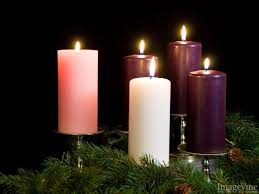
Lighting the Candle of Peace—Finding God’s Calm in Life’s Chaos
Peace. We long for it—in our hearts, in our homes, in our world. But true peace is not just the absence of conflict. It is having God’s presence, steady and unshakeable, even when everything around us is falling apart.
The peace Christ brings does not depend on circumstances. It is rooted in His presence.
Scripture:
“The wolf will live with the lamb, the leopard will lie down with the goat, the calf and the lion and the yearling together; and a little child will lead them.” – Isaiah 11:6 (NIV)
Additional Verses:
- “Repent, for the kingdom of heaven has come near.” – Matthew 3:2 (NIV)
- “Peace I leave with you; my peace I give you. I do not give to you as the world gives. Do not let your hearts be troubled and do not be afraid.” – John 14:27 (NIV)
- “You will keep in perfect peace those whose minds are steadfast, because they trust in you.” – Isaiah 26:3 (NIV)
Scripture Reflection
On Isaiah 11:6 – Isaiah paints a picture that seems impossible: animals that hunt living peacefully with animals they usually eat. Wolves with lambs. Leopards with goats. Natural enemies at rest. This is not just poetry—it is prophecy about the peace Christ brings. A peace so deep, it brings together things that cannot be together. It calms what cannot be calmed. It heals what seems permanently broken. The peace of God’s kingdom changes everything it touches, making the impossible possible.
On Matthew 3:2 – John the Baptist came with an urgent message: “Repent!” Not to scold, but to prepare. To get ready. The kingdom of heaven is coming near, he said, and it needs preparation. True peace begins with turning toward God, clearing away what blocks His presence, and making straight paths for Him to enter our lives. Peace is not something we create—it is Someone we receive. But we must prepare room for Him.
On John 14:27 – Jesus offers peace, but not the kind the world gives. The world’s peace depends on good things happening, good health reports, stable money, and peaceful relationships. But Jesus’ peace stands independent of circumstances. It is the kind of peace that can exist in a hospital room, in a season of loss, in a body that is failing. His peace guards our hearts even when life does not make sense. That is supernatural peace.
On Isaiah 26:3 – “Perfect peace” comes to those whose minds stay fixed on God. Not to those with perfect circumstances, but to those with steady trust. Notice where peace lives: in the mind that stays focused on God. When our thoughts go round and round with worry, peace disappears. But when we keep our minds on God’s character, His faithfulness, His presence—perfect peace holds steady. This is something we can practice, especially in later life when worries about health, future, and loss feel big.
Additional Commentary: Peace in the Storm of Aging
There is a special kind of turmoil that comes with aging. Bodies rebel. Memory fails. Independence decreases. Loved ones pass away. The world changes faster than we can keep up. Plans we made fall apart. The control we once had slips away.
Where is peace in that?
The answer Advent gives us is amazing. It is found in trusting the One who controls circumstances. Peace is not having no chaos—it is having Christ in the midst of chaos.
John the Baptist came preparing the way for the Prince of Peace. His message was radical: repent. Turn around. Change direction. Stop trying to make peace through control and instead surrender to the God who brings peace.
In later life, we are forced to surrender whether we like it or not. We cannot control our bodies like we used to. We cannot control outcomes. We cannot control how much time we have left. The question becomes: will we surrender with fighting and anxiety, or will we surrender into the arms of the Prince of Peace?
Isaiah’s vision of the wolf dwelling with the lamb reflects the many opposites we experience: wanting independence while recognizing dependence, longing for the past while accepting the present, and fearing death while holding faith in eternal life. These contrasts can find harmony—not by our own efforts, but through Christ’s presence.
This Advent candle of Peace invites us to stop fighting what we cannot change and start trusting the One who never changes.
Stories
Helen’s Doctor’s Appointment: Finding Peace in Uncertainty
Helen, 69, sat in her car outside the medical center, hands gripping the steering wheel. Inside that building, a doctor waited with test results that could change everything.
For three days, she barely slept or ate, overwhelmed by worst-case scenarios. “What if it’s cancer? What if I need surgery? What if treatment doesn’t work? What if…”
Her phone vibrated. A text from her prayer group: “Isaiah 26:3 – You will keep in perfect peace those whose minds are steadfast, because they trust in you.”
Helen read it three times. Then she prayed, voice shaking: “God, I don’t feel peaceful. I feel terrified. But Your Word says perfect peace comes when I keep my mind on You. So… I’m trying. Help me.”
She focused on what she knew to be true: God had walked with her through 69 years. He’d never abandoned her.
Helen walked in, still scared, but no longer overwhelmed. The news was difficult for her as treatment would be needed. But as the doctor explained the options, Helen felt it: a quiet, unexplainable calm. Not because the situation was good, but because she wasn’t alone in it.
“I’ve learned something about peace,” Helen reflected weeks later, now in treatment. “It’s not about the storm calming. It’s about God calming you in the storm. Every morning, I wake up scared, and every morning I make the same choice: keep my mind on Him. And every morning, somehow, there’s enough peace to get through the day.”
Research in the Journal of Behavioral Medicine shows that spiritual coping mechanisms, particularly trust-based prayer and scriptural meditation, significantly reduce anxiety and improve outcomes in patients facing serious illness. But Helen would say it simpler: “Jesus promised His peace. And He keeps His promises.”
Robert and Grace: Making Peace After 50 Years
Robert, 78, and his brother hadn’t spoken in 15 years. A family argument over their mother’s estate had ruined their relationship. Pride, hurt, and stubbornness had built walls too thick to climb.
But this Advent, as Robert’s church lit the second candle—the candle of Peace—something stirred in him. The pastor read Isaiah 11:6: “The wolf will live with the lamb.”
“If God can make natural enemies peaceful,” the pastor said, “He can reconcile any relationship. But someone has to be willing to make the first move.”
Robert sat in the pew, wrestling. Fifty years of brotherhood, destroyed by fifteen years of silence. It seemed impossible to bridge.
That evening, Robert picked up the phone. His hands shook as he dialed his brother’s number. It rang four times. Then: “Hello?”
“Grace,” Robert said to his brother’s wife. “It’s Robert. Is… is my brother there?”
The silence stretched long. Then Grace said, voice tight with emotion, “He’s here. And Robert? He’s been wanting to call you, too. Hold on.”
The conversation was awkward, unnatural at first. Both men apologized. Both admitted fault. Both cried. And by the end, something impossible had happened: peace.
“We’re having Christmas together this year,” Robert said later, tears streaming. “First time in 15 years. The wolf and the lamb, sitting at the same table. Only God could do that.”
Robert’s daughter asked him, “Dad, why now? What changed?”
Robert touched the Advent wreath on his table. “I realized I don’t have many Advents left. Maybe ten, if I’m blessed. I can’t waste them holding grudges. Christ came to bring peace on earth—peace with God, peace with each other. How can I celebrate His peace while refusing to make peace? The Prince of Peace broke down the walls between me and God. The least I could do was break down the wall between me and my brother.”
Studies on forgiveness and aging from the Stanford Forgiveness Project show that older adults who practice forgiveness experience better cardiovascular health, lower stress, and improved quality of life. But Robert discovered something deeper: “Peace isn’t just healthy. It’s holy. It reflects the heart of the Prince of Peace Himself.”
Reflection
The second candle of Advent is purple—the color of royalty and repentance. We light it remembering that the Prince of Peace came, and is coming again, and is present now. But His peace requires something of us: preparation.
John the Baptist stood in the wilderness crying “Repent!”—make ready, prepare the way. He wasn’t being harsh. He was being practical. You can’t receive peace while embracing anxiety. You can’t experience rest while gripping control. You can’t know God’s calm while insisting on your own way.
Repentance means turning around. Changing direction. Letting go of what doesn’t work and reaching for what does.
In later life, so much repenting is required. Not because you’re sinful, but because you’re human. We must repent of the illusion of control. Repent of trying to stay forever young. Repent of resisting what we can’t change. Repent of holding grudges we don’t have time left to carry.
This sounds hard. But repentance is actually the doorway to peace. It’s saying, “I surrender. God, I’m letting go of what I can’t control and trusting You with it.” And in that surrender, peace floods in.
Look at Helen: she couldn’t change her diagnosis. But she could change what her mind dwelled on. She turned from catastrophizing to trusting. That’s repentance. And it brought peace.
Look at Robert: he couldn’t undo fifteen years of silence. But he could make the first move toward reconciliation. He turned from pride to humility. That’s repentance. And it brought peace—not just to him, but to his whole family.
The peace Christ offers isn’t circumstantial. It’s supernatural. As Jesus said, “My peace I give you. I do not give to you as the world gives.”
Isaiah 26:3 captures this perfectly: “You will keep in perfect peace those whose minds are steadfast, because they trust in you.” Perfect peace. Not partial peace. Not peace-when-things-are-going-well. Perfect peace—available to those whose minds stay fixed on God.
This is the discipline of Advent peace: training our minds to stay steadfast on God. When worry intrudes (and it will), gently turn back to God. When fear grips (and it will), remind yourself of His faithfulness. When circumstances scream chaos (and they will), focus on His unchanging presence.
This isn’t denial. Helen didn’t pretend cancer wasn’t scary. Robert didn’t pretend fifteen years of silence didn’t hurt. They acknowledge reality while simultaneously anchoring in a deeper reality: God is here, God is faithful, God brings peace.
Theologian Paul Tillich wrote, “Anxiety is the existential awareness of nonbeing.” We’re anxious because we’re aware of our mortality, our limitations, our vulnerability. But peace comes from focusing not on our nonbeing, but on God’s eternal being. He was. He is. He always will be. And He is with us.
This Advent, as you light the second candle, you’re declaring: “Prince of Peace, I prepare room for You. I surrender what I can’t control. I release what I can’t change. I turn my mind toward You. Come with Your peace. I’m ready to receive it.”
And He will come. Just as Jesus came at Christmas. Just as He’ll come again at the end. He comes now, in this moment, bringing the peace that passes understanding—the peace that guards your heart and mind in Christ Jesus.
Practical Truths (Going Deeper)
- Peace requires preparation. John the Baptist’s message was clear: prepare the way. Make room. Clear out what blocks God’s presence. In practical terms, this might mean: releasing grudges like Robert, surrendering control like Helen.
- Peace is supernatural, not circumstantial. You don’t need perfect circumstances to experience God’s peace. Helen had cancer and Robert had broken relationships. Yet all found peace. Why? Because Christ’s peace doesn’t depend on circumstances—it transcends them.
- Peace is a practice, not a feeling. Helen doesn’t automatically feel calm—she chooses to fix her mind on God. Peace is something we cultivate through daily turning toward God, not something we passively wait to feel.
- Reconciliation brings peace. Robert discovered what Scripture teaches: as much as it depends on you, live at peace with everyone (Romans 12:18). At your age, you don’t have time to waste on unresolved conflicts. Make peace where you can. You’ll be amazed how it frees you.
- God’s peace guards your mind. Philippians 4:7 says God’s peace “guards your hearts and your minds in Christ Jesus.” Like a guard stationed at a door, peace stands watch over your thoughts, keeping anxiety from taking over. That’s the gift we receive when we trust God—supernatural protection for our minds.
Prayer
Prince of Peace, as we light this second candle of Advent, we tell You: we need Your peace desperately. Life feels chaotic. Bodies fail. Relationships are strained. Futures are uncertain. We have tried to find peace in circumstances, but circumstances keep changing. We have tried to make peace through control, but we cannot control what matters most. So we repent. We turn around. We surrender. We prepare room for You. Come with Your supernatural peace—the kind that does not depend on circumstances, the kind that stands steady when everything shakes. Keep our minds fixed on You. When worry comes in, remind us of Your faithfulness. When fear grabs us, whisper Your promises. When chaos surrounds us, be our calm center. Bring peace to what is broken in our relationships. Heal what is wounded in our hearts. Guard our minds with Your peace that is beyond understanding. We cannot create peace on our own. But You are the Prince of Peace. And we trust You to do what only You can do. Come, Lord Jesus. Bring Your peace. Amen.
Call to Connection
Today’s Challenge: This week, practice the “steadfast mind” discipline from Isaiah 26:3. When anxiety rises, pause and speak truth about God aloud: “God is faithful. God is present. God brings peace.” Redirect your mind to Him as many times as needed. Also consider: is there a relationship that needs reconciliation? Like Robert, maybe this is your Advent to make peace.
Community: How has God’s peace met you in chaotic circumstances? Share your story! And if there’s someone you need to reconcile with, leave the word “Courage” and we’ll pray for you to take that step.
Related Music
- “Let There Be Peace on Earth” – Sy Miller & Jill Jackson
- “Come Thou Long Expected Jesus” – Charles Wesley
- “It Is Well With My Soul” – Horatio Spafford (Traditional Hymn)
- “Peace, Peace” – Hillsong Worship
- “O Little Town of Bethlehem” – Traditional Carol
Facts & Research
- Research in the Journal of Behavioral Medicine shows that spiritual coping mechanisms, particularly trust-based prayer and scriptural meditation, significantly reduce anxiety in patients facing serious illness.
- The Stanford Forgiveness Project found that older adults who practice forgiveness experience better cardiovascular health, lower stress, and improved quality of life.
- Dr. Harold Koenig’s research demonstrates that spiritual practices significantly reduce caregiver burnout and depression, with daily scripture reading being particularly protective.
- Studies in Psychology and Aging show that “cognitive reframing”—changing what the mind focuses on—is one of the most effective anxiety-reduction strategies for older adults, aligning perfectly with Isaiah 26:3’s “steadfast mind” teaching.
- Research from Duke University found that people who maintain daily spiritual practices report 40% less anxiety than those who don’t, regardless of life circumstances.
Quotes from Resource Persons
Paul Tillich, Theologian: “Anxiety is the existential awareness of nonbeing. Peace comes from focusing not on our nonbeing, but on God’s eternal being.”
Corrie ten Boom: “If you look at the world, you’ll be distressed. If you look within, you’ll be depressed. If you look at God, you’ll be at rest.”
St. Augustine: “You have made us for yourself, O Lord, and our heart is restless until it rests in you.”
Dietrich Bonhoeffer: “Advent creates people, new people.”
Max Lucado: “God is in control, and therefore in everything I can give thanks—not because of the situation but because of the One who directs and rules over it.”
Source/Footnotes
- Isaiah 11:1-10; Matthew 3:1-12; John 14:27; Isaiah 26:3 (NIV)
- Journal of Behavioral Medicine research on spiritual coping and anxiety
- Stanford Forgiveness Project findings on forgiveness and health
- Koenig, H. extensive research on spirituality and caregiving
- Duke University studies on spiritual practices and anxiety reduction
- Tillich, P. “The Courage to Be”
- ten Boom, C. “Reflections of God’s Glory”
- Stories of Helen, Robert, and others are composites based on pastoral care experiences, with names and details changed to protect privacy.
A Journey Through Hope, Peace, Joy, and Love
Dear Friends, as we enter this sacred season of Advent, I am excited to share a special series with you: An Advent Journey for the Seasoned Soul. Find more at the Chapel Notes page…